Compostos fenólicos de plantas alimentícias não convencionais que ocorrem espontaneamente em um sistema agroflorestal
DOI:
https://doi.org/10.20873/jbb.uft.cemaf.v13n3.20316Palavras-chave:
compostos fenólicos, sistemas agroecológicos, plantas alimentícias não convencionaisResumo
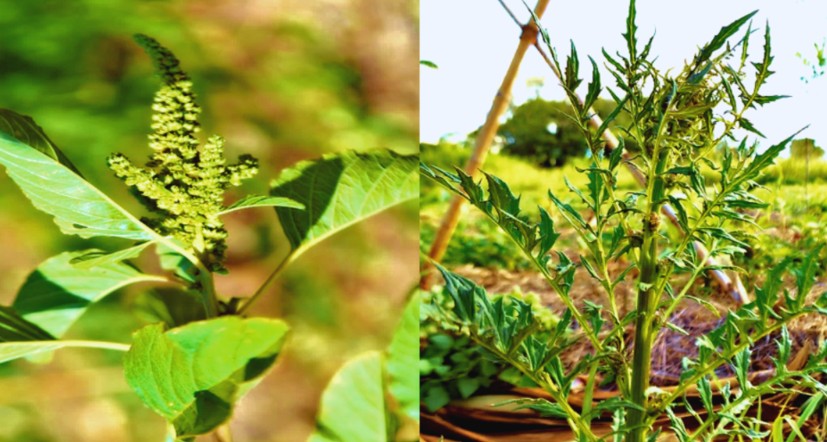
Em sistemas agroflorestais, a interação entre diferentes espécies recria a atividade de ecossistemas naturais, portanto, o estrato herbáceo tende a ser diverso, com ocorrência de várias plantas espontâneas. Este estudo teve como objetivo fazer um levantamento de espécies vegetais folhosas com ocorrência espontânea do extrato herbáceo presente em um sistema agroflorestal, identificar as plantas alimentícias não convencionais, analisar características bioquímicas e determinar o teor total de compostos fenólicos e flavonoides das espécies. Um total de 33 espécies foram coletadas em quatro coletas sazonais, 14 das quais foram identificadas como plantas alimentícias não convencionais. A análise de dados usando ANOVA e o teste de Scott-Knott a 5% de significância revelou diferenças significativas entre as espécies para todas as variáveis avaliadas. O teor médio de água foi de 84%, enquanto o teor de nitrogênio variou significativamente, com uma média de 30,34%. O teor de açúcar redutor foi consistente entre as espécies, com média de 6,6%. Os resultados do conteúdo fenólico total foram expressos em peso seco e variaram de 0,007 g EAG 100 g⁻¹ para Alternanthera tenella a 0,144 g EAG 100 g⁻¹ para Emilia fosbergii. O conteúdo de flavonoides totais variou de 0,121 g EQ 100 g-1 para Sonchus oleraceus a 1,071 g EQ 100 g-1 para Raphanus raphanistrum, que, junto com a espécie Emilia fosbergii (1,048 g EQ 100 g-1) exibiram os maiores valores de flavonóides totais. Essas descobertas sugerem que as plantas herbáceas espontâneas herbáceas encontradas no sistema agroflorestal são ricas em compostos bioativos, oferecendo potencial para diversificação de alimentos e contribuindo para a conservação da biodiversidade local.
Referências
Abdul WN, Ahdan R, Ahmad AZ, Kong KW, Johar MH, Ismail A. Nutritional values and bioactive components of under-utilised vegetables consumed by indigenous people in Malaysia. Journal of the Science of Food and Agriculture, v. 95, n. 13, p. 2704–2711, 2015.
DOI: 10.1002/jsfa.7006
Aguiar TCF, Nunes A, de Souza Damasceno M. UNCON-VENTIONAL FOOD PLANTS (UFP) FOUND IN SANTA CATARINA STATE: nutritional and therapeutic potential. Revista Eletrônica Científica Ensino Interdiscipli-nar, 6(18), 2020.
DOI: 10.21920/recei72020618731753
Association of Official Analytical Chemists – AOAC. Official methods of analysis. 16 ed. Arlington: AOAC, 1995, v. 1.
Awad MA, Jager A, Van Westing LM. Flavonoid and chloro-genic acid levels in apple fruit: Characterisation of variation. Scientia Horticulturae, v. 83, p. 249–263, 2000. https://doi.org/10.1016/S0304-4238(99)00124-7
Barreira TF, Paula Filho GX, Pinheiro SS, Cardoso LM, Santos HS, Pinheiro-Sant’ana HM. Chemical characteriza-tion and bioactive compounds of an unconventional vegeta-ble-Erechtites valerianifolia (Wolf) DC." Food Science and Technology, 39, 546-551, 2019. https://doi.org/10.1590/fst.27217
BRASIL, Ministerio da agricultura, Pecuária e Abastecimento (2010) Manual de hortaliças não convencionais – Brasília: MAPA, p.76.
BRASIL. Resolução ANVISA/MS RDC nº 269, de 22 de setembro de 2005. Regulamento Técnico sobre Rotulagem Nutricional de Alimentos Embalados. Diário Oficial da Uni-ão, Brasília, DF, 22 set. 2005.
Brglez M E, Knez HM, Škerget M, Knez Z, Bren U. Polyphe-nols: Extraction methods, antioxidative action, bioavailability and anticarcinogenic effects. Molecules, v. 21, n. 7, p. 901, 2016.
DOI: 10.3390/molecules21070901.
Cáceres A, Cruz SM. Edible seeds, leaves and flowers as Maya Super Foods: Function and composition. International Journal of Phytocosmetics and Natural Ingredients, v. 6, n. 1, p. 2–2, 2019.
DOI:10.15171/ijpni.2019.02
Chitarra MIF e Chitarra AB. Pós- colheita de frutos e horta-liças: fisiologia e manuseio. Lavras: ESAL/FAEPE. 735 p. 2005.
De Carvalho POAA, Guerra GCB, Borges GSC, Bezerril FF, Sampaio KB, Ribeiro TS, Pacheco MTB, Milani RF, Gold-beck R, Ávila PF, Lima MS, De Souza MFV, Queiroga RCRE. Nutritional potential and bioactive compounds of xique‐xique juice: An unconventional food plant from Semi-arid Brazilian. Journal of Food Processing and Preservation, v. 45, n. 4, p. e15265, 2021. https://doi.org/10.1111/jfpp.15265
De Oliveira Júnior, CJf, Cabreira PP. Sistemas agroflorestais: potencial econômico da biodiversidade vegetal a partir do conhecimento tradicional ou local. Revista Verde de Agroe-cologia e Desenvolvimento Sustentável, v. 7, n. 1, p. 37. ISSN 1981-8203, 2012.
Deladino L, Alvarez I, Ancos B, Sánchez-Moreno C, Molina-García AD, Teixeira AS. Betalains and phenolic compounds of leaves and stems of Alternanthera brasiliana and Alter-nanthera tenella. Food Research International, 97, 240–249, 2017.
https://doi.org/10.1016/j.foodres.2017.04.01
Ferreira, DF. Sisvar: a computer statistical analysis system. Ciência e Agrotecnologia (UFLA), v. 35, n.6, p. 1039-1042, 2011.
https://doi.org/10.1590/S1413-70542011000600001
Ghirardini MP, Carli M, del Vecchio N, Rovati A, Cova O, Vagili F, Agnetti G, Macconi M, Adamo D, Traina M, Laudini F, Marcheselli I, Caruso N, Gedda, T, Donati F, Marzadro A, Russi P, Spaggiari C, Bianco M, Binda R, Barattieri E, Tognacci A, Girardo M, Vaschetti L, Caprino P, Sesti E, Andreozzi G, Coletto E, Belzer G, Pieroni A. The importance of a taste. A comparative study on wild food plant consumption in twenty-one local communities in Italy. Journal of Ethnobiology and Ethnomedicine, v. 3, 4., 2007.
doi: 10.1186/1746-4269-3-22.
Hailu L, Tesfaye G, Fikirie K, Debebe Y. Effect of land-use practices on species diversity and selected soil property in Somodo Watershed South-Western Ethiopia. Plos one, 16(5), e0252305, 2021.
https://doi.org/10.1371/journal.pone.0252305
Han S, Xu B. Bioactive components of leafy vegetable edible amaranth (Amaranthus mangostanus L.) as affected by home cooking manners. American Journal of Food Science and Technology, 2(4), 122-127, 2014.
DOI: 10.12691/ajfst-2-4-3
Hernández-Rodríguez P, Baquero LP, Larrota HR. Flavo-noids: potential therapeutic agents by their antioxidant capac-ity. In: Bioactive compounds. Woodhead Publishing, p. 265-288, 2019.
https://doi.org/10.1016/B978-0-12-814774-0.00014-1
IBGE (1980) Nomeclatura dos Alimentos Consumidos no Brasil - Rio de Janeiro. Fundação Instituto Brasileiro de Ge-ografia e Estatística (IBGE) (Parte I – Vegetais). 130p.
Iyda JH, Fernandes AF, Ferreira FD, Alves MJ, Pires TCSP, Barros L, Amaral JS, Ferreira ICFR. Chemical composition and bioactive properties of the wild edible plant Raphanus raphanistrum L. Food Research International, v. 121, p. 714-722, 2019.
DOI: https://doi.org/10.1016/j.foodres.2018.12.046
Jacob MCM, Chaves VM, Rocha C. Biodiversity Towards Sustainable Food Systems: Four Arguments. In: Jacob MCM, Albuquerque U.P. (eds) Local Food Plants of Brazil. Ethnobiology. Springer, Cham. 2021. DOI: https://doi.org/10.1007/978-3-030-69139-4_1
Jiménez-Aguilar DM, Grusak MA. Minerals, vitamin C, phenolics, flavonoids and antioxidant activity of Amaran-thus leafy vegetables. Journal of Food Composition and Analysis, 58, 33–39, 2017.
DOI: 10.1016/j.jfca.2017.01.005
Kinupp VF, Barros IBI. Protein and mineral contents of native species, potential vegetables, and fruits. Ciência e Tecnolo-gia de Alimentos, v. 28, n. 4, p. 846–857, 2008. DOI: https://doi.org/10.1590/S0101-20612008000400013
Kinupp VF, Barros IBI. Riqueza de Plantas Alimentícias Não-Convencionais na Região Metropolitana de Porto Alegre, Rio Grande do Sul. Revista Brasileira de Biociências, v. 5, n. S1, p. 63-65, 2007. Avaiable at http://revistas.aba-agroecolo-gia.org.br/index.php/rbagroecologia/article/view/7544
Kinupp VF, Lorenzi H. Plantas Alimentícias Não Convencio-nas (PANC) no Brasil: guia de identificação, aspectos nutri-cionais e recitas ilustradas – São Paulo: Instituto Plantarum de Estudos da Flora. 768 p. 2014.
Knupp SNR, Knupp LS, Riet-Correa F, Lucena RB. Plants that cause photosensitivity in ruminants in Brazil. Semina: Ciencias Agrarias, 37(4), 2009-2019, 2016.
DOI: 10.5433/1679-0359.2016v37n4p2009
Kris-Etherton PM, Hecker KD, Bonanome A, Coval SM, Binkoski AE, Hilpert KF, Amy EG, Etherton TD. Bioactive compounds in foods: their role in the prevention of cardio-vascular disease and cancer. The American Journal of Medi-cine, 113(9), 71–88, 2002.
doi:10.1016/s0002-9343(01)00995-0
Kujawska M, Luczaj L. Wild edible plants used by the Polish community in Misiones, Argentina. Human Ecology, v. 43, n. 6, p. 855-869, 2015.
DOI: 10.1007/s10745-015-9790-9
Larson RA. The antioxidants of higher plants. Phytochemistry, 27(4), 969–978, 1998.
doi:10.1016/0031-9422(88)80254-1
Leal ML, Alves RP, Hanazaki N. Knowledge, use, and disuse of unconventional food plants. Journal of Ethnobiology Ethnomedicine 14, 6, 2018. https://doi.org/10.1186/s13002-018-0209-8
Liang YC, Lin CJ, Yang CY, Chen YH, Yang MT, Chou FS, Yang WC, Chang, CLT. Toxicity study of Bidens pilosa in animals. Journal of Traditional and Complementary Medi-cine, v. 10, n. 2, p. 150–157, 2020. DOI: https://doi.org/10.1016/j.jtcme.2019.04.002
Liu R. H. Health-promoting components of fruits and vegeta-bles in the diet. Advances in nutrition, v. 4, n. 3, p. 384S-392S, 2013.
DOI: 10.3945/an.112.003517
Lola A. The effect of boiling on the nutrients and anti-nutrients in two non conventional vegetables. Pakistan Journal of Nu-trition, v. 8, n. 9, p. 1430–1433, 2009. Acesso em: 01 de jul. de 2020.
DOI:10.3923/pjn.2009.1430.1433
Manzanero-Medina GI, Vásquez-Dávila MA, Lustre-Sánchez H, Pérez-Herrera A. Ethnobotany of food plants (quelites) sold in two traditional markets of Oaxaca, Mexico. South African Journal of Botany, v. 130, p. 215–223, 2020. https://doi.org/10.1016/j.sajb.2020.01.002
Menezes FDDAB, Ishizawa TA, Souto LRF, Oliveira TFD. Talinum paniculatum (Jacq.) Gaertn. leaves–source of nutri-ents, antioxidant and antibacterial potentials. Acta Scienti-arum Polonorum Technologia Alimentaria, 20(3), 253-263, 2021.
DOI: 10.17306/J.AFS.0892
Moura OI, Santana Júnior CC, Lourenço YRF, Souza MF, Silva ARST, Dolabella SS, Silva AMO, Oliveira TB, Duar-te MC, Faraoni AS. Chemical Characterization, Antioxidant Activity and Cytotoxicity of the Unconventional Food Plants: Sweet Potato (Ipomoea batatas (L.) Lam.) Leaf, Ma-jor Gomes (Talinum paniculatum (Jacq.) Gaertn.) and Ca-ruru (Amaranthus deflexus L.). Waste and Biomass Valori-zation v. 1, n. 12, p. 2407-2431, 2020. DOI: https://doi.org/10.1007/s12649-020-01186-z
Nelson, N. A photometric adaptation of somogyi method for determination of glucose. The Journal of Biological Chemis-try, Bethesda, v.153, p.375–380, 1944. DOI: https://doi.org/10.1016/S0021-9258(18)71980-7
NEPA/UNICAMP. Tabela brasileira de composição de ali-mentos – TACO. Versão 2. Available at: http://www.unicamp.br/nepa/taco
Panfili G, Niro S, Bufano A, D’Agostino A, Fratianni A, Paura B, Falasca L, Cinquanta L. Bioactive Compounds in Wild Asteraceae Edible Plants Consumed in the Mediterra-nean Diet. Plant Foods for Human Nutrition, v. 75,4 p. 540-546, 2020.
DOI: doi:10.1007/s11130-020-00842-y
Peisino MCO, Zouain MS, Scherer MMC, Schmitt EFP, Silva MVT, Barth T, Endriger DC, Scherer R, Fronza M. Health-Promoting Properties of Brazilian Unconventional Food Plants. Waste and Biomass Valorization, v. 11, n. 9, p. 4691–4700, 2020.
DOI:10.1007/s12649-019-00792-w
Petropoulos S Α, Fernandes A, Tzortzakis N, Soković M, Ćirić A, Barros L, Ferreira IC. Bioactive compounds content and antimicrobial activities of wild edible Asteraceae species of the Mediterranean flora under commercial cultivation conditions. Food Research International, v. 119, p. 859-868, 2019.
DOI: 10.1016/j.foodres.2018.10.069
Pieniz S, Colpo E, Oliveira VR, Estefane, Andreazza R. Ava-liação in vitro do potencial antioxidante de frutas e hortali-ças. Ciência e agrotecnologia [online]. 2009, vol.33, n.2, Pp.552-559, 2009.
https://doi.org/10.1590/S1413-70542009000200030
Pompeu DG, Carvalho, AS, Costa, OFD, Galdino AS, Gon-çalves DB, Silva JA, Granjeiro PA. Fatores antinutricionais e digestibilidade “in vitro” de folhas de Pereskia aculeata Miller, v.3, n.1. Pp. 1-9, 2014. DOI: http://dx.doi.org/10.5433/2316-5200.2014v3n1p1
Popova M, Bankova V, Butovska D, Petkov V, Nikolova-Damyanova B, Sabatini AG, Marcazzan GL, Bogdanov S. Validated methods for the quantification of biologically ac-tive constituents of poplar-type propolis. Phytochemical Analysis, v. 15, p. 235–340, 2004. Phytochemical Analysis, v. 15,4. Pp.71-81, 2002.
DOI: 10.1002/pca.777
Rapoport EH, Drausal BS. Edible plants. In: Levin SA (ed) Encyclopedia of biodiversity, USA, vol 2. Academic Press, New York, Pp. 375–381, 2001.
Ray A, Ray R, Sreevidya EA. How many wild edible plants do we eat—their diversity, use, and implications for sustain-able food system: an exploratory analysis in India. Frontiers in Sustainable Food Systems, v. 4, p. 56, 2020. https://doi.org/10.3389/fsufs.2020.00056
Reis A, Kleinowski AM, Klein FRS, Trevizan R, Amarante L, Braga EJB. Light quality on the in vitro growth and produc-tion of pigments in the genus Alternanthera. Journal of Crop Science and Biotechnology, 18(5), 349-357, 2015. DOI:10.1007/s12892-015-0074-0
Rice-Evans C.; Miller N.; Paganga G. Antioxidant properties of phenolic compounds. Trends in plant science, v. 2, n. 4, p. 152-159, 1997.
https://doi.org/10.1016/S1360-1385(97)01018-2
Roque N, Bautista H. Asteraceae: caracterização e morfologia floral. - Salvador: EDUFBA. 2008. Available at http://repositorio.ufba.br/ri/handle/ri/25086
Rosa FT, Zulet MA, Marchini JS, Martínez JA. Bioactive compounds with efects on infammation markers in humans. International Journal of Food Science and Nutrition. 63, 749–765, 2012.
DOI: https://doi. org/10.3109/09637486.2011.649250
Roy D, Mullick R, Chakraborty N, Ghosh J, Das D, Mallick B, Samanta D. Influence of the Home Cooking Practices on the Bioactive Components of Two Important Edible Herbs-Amaranthus viridis and Amaranthus tricolor. International Journal of Pharmaceutical Investigation, 11(1), 27-31, 2021.
DOI: 10.5530/ijpi.2021.1.6
Sakuta M. Diversity in plant red pigments: anthocyanins and betacyanins. Plant biotechnology reports, 8(1), 37-48, 2014.
DOI: https://doi.org/10.1007/s11816-013-0294-z
Sánchez-Mata MC, Tardío J. Mediterranean wild edible plants. Ethnobotany and food composition tables. Springer Nature Switzerland AG, New York. 2016. DOI: DOI:10.1007/978-1-4939-3329-7
Santos-Buelga C, Gonzales-Paramás AM, Oludemi T, Ayuda-Durán B, González-Manzano S. Plant phenolics as func-tional food ingredients. Advances in food and nutrition re-search, v. 90, p. 183-257, 2019. DOI: https://doi.org/10.1016/bs.afnr.2019.02.012
Shin T, Ahn M, Kim GO, Park SU. Biological activity of various radish species. Oriental Pharmacy and Experimental Medicine, 15(2), 105–111, 2015.
DOI:10.1007/s13596-015-0183-9
Singleton VL, Rossi JAJ. Colorimetry of Total Phenolics with Phosphomolybdic-Phosphotungstic Acid Reagents. Ameri-can Journal of Enology and Viticulture, v. 16, n. 3, p. 144–158, 1965.
Somogy MA. New regent for the determination of sugars. The Journal of Biological Chemistry, Bethesda, v.160, n.1, p.601–668, 1945.
Souza L, Dória KMABVS. Levantamento etnobotânico de plantas medicinais no bairro Massaguaçu, Caraguatatuba – SP. Unisanta BioScience, v.5, n.4, p. 335-345, 2016. DOI: http://dx.doi.org/10.18066/revistaunivap.v22i40.901
Steenbock W, Silva RO, Froufe LCM, Seoane CE. Agroflo-restas e sistemas agroflorestais no espaço e no tempo. In book: Agrofloresta, ecologia e sociedade (pp.39 - 60) Edi-tion: 1. Chapter: Agroflorestas e sistemas agroflorestais no espaço e no tempo Publisher: Ed. Kairós, Curitiba, Pp. 39–60. 2013. Available at http://www.bibliotecaflorestal.ufv.br/bitstream/handle/123456789/5387/Livro_Agrofloresta-Ecologia-e-Sociedade_Kairos.pdf?sequence=1&isAllowed=y
Tanaka T. Tanaka’s Cyclopedia of Edible Plants of the World. Japan, p.x, 1976.
Terra SB, Viera CTR. Plantas Alimentícias Não Convencio-nais (PANCs): levantamento em zonas urbanas de Santana do Livramento, Revista Ambiência, v. 15, n. 1, p. 112-130, 2019. DOI:
https://doi.org/10.34117/bjdv6n9-386
Tinkov AA, Nemereshina ON, Suliburska J, Gatiatulina ER, Regula J, Nikorov AA Skalny AV. Comparative Analysis of the Trace Element Content of the Leaves and Roots of Three Plantago Species. Biological Trace Element Research, v. 173, n. 1, p. 225–230, 2016. DOI: 10.1007/s12011-016-0626-2
TROPICOS.ORG. Missouri Botanical Garden. Available at: <http://www.tropicos.org>. Acesso em 20 Set. 2019.
Viana MMS, Carlos LA, Silva EC, Pereira SMF, Oliveira DB, Assis MLV. Composição fitoquímica e potencial antio-xidante de hortaliças não convencionais. Horticultura Brasi-leira, v. 33, p. 504-509, 2015. DOI: https://doi.org/10.1590/S0102-053620150000400016
Xia DZ, Yu XF, Zhu ZY, Zou ZD. Antioxidant and antibacte-rial activity of six edible wild plants (Sonchus spp.) in Chi-na. Natural Product Research, 25(20), 1893–901, 2011. DOI: https://doi.org/10.1080/14786419.2010.534093
Yang L, Wen KS, Ruan X, Zhao YX, Wei F, Wang Q. Re-sponse of plant secondary metabolites to environmental fac-tors. Molecules, 23(4), 762, 2018.
DOI: 10.3390/molecules23040762
Yuan B, Byrnes D, Giurleo D, Villani T, Simon J E, Wu Q. Rapid screening of toxic glycoalkaloids and micronutrients in edible nightshades (Solanum spp.). Journal of Food and Drug Analysis, v. 26, n. 2, p. 751–760, 2018.
DOI: 10.1016/j.jfda.2017.10.005
Zhang S, Hu J, Sun Y, Tan H, Yin J, Geng F, Nie S. Review of structure and bioactivity of the Plantago (Plantaginaceae) polysaccharides. Food Chemistry: X, 12, 100158, 2021.
Downloads
Publicado
Como Citar
Edição
Seção
Licença
Copyright (c) 2025 Mariana Nunes Ferreira Cabral, Maria Izabela Ferreira, Gabriela Granghelli Gonçalves, Matheus Antônio Filiol Belin, Giuseppina Pace Pereira Lima, Filipe Pereira Giardini Bonfim, Lin Chau Ming

Este trabalho está licenciado sob uma licença Creative Commons Attribution 4.0 International License.
Copyright (c) 2024 - Journal of Biotechnology and Biodiversity

Este obra está licenciado com uma Licença Creative Commons Atribuição 4.0 Internacional.
Autores que publicam nesta revista concordam com os seguintes termos:
Autores mantêm os direitos autorais e concedem à revista o direito de primeira publicação, com o trabalho simultaneamente licenciado sob a Licença Creative Commons Attribution (CC BY 4.0 no link http://creativecommons.org/licenses/by/4.0/) que permite o compartilhamento do trabalho com reconhecimento da autoria e publicação inicial nesta revista.
Autores têm autorização para assumir contratos adicionais separadamente, para distribuição não exclusiva da versão do trabalho publicada nesta revista (ex.: publicar em repositório institucional ou como capítulo de livro), com reconhecimento de autoria e publicação inicial nesta revista.
Autores têm permissão e são estimulados a publicar e distribuir seu trabalho online (ex.: em repositórios institucionais ou na sua página pessoal) a qualquer momento antes ou durante o processo editorial, já que isso pode gerar alterações produtivas, bem como aumentar o impacto e a citação do trabalho publicado (disponibilizado em O Efeito do Acesso Livre no link http://opcit.eprints.org/oacitation-biblio.html).